Drainage in Birmingham Gardens
CCTV Drain Inspections Birmingham Gardens
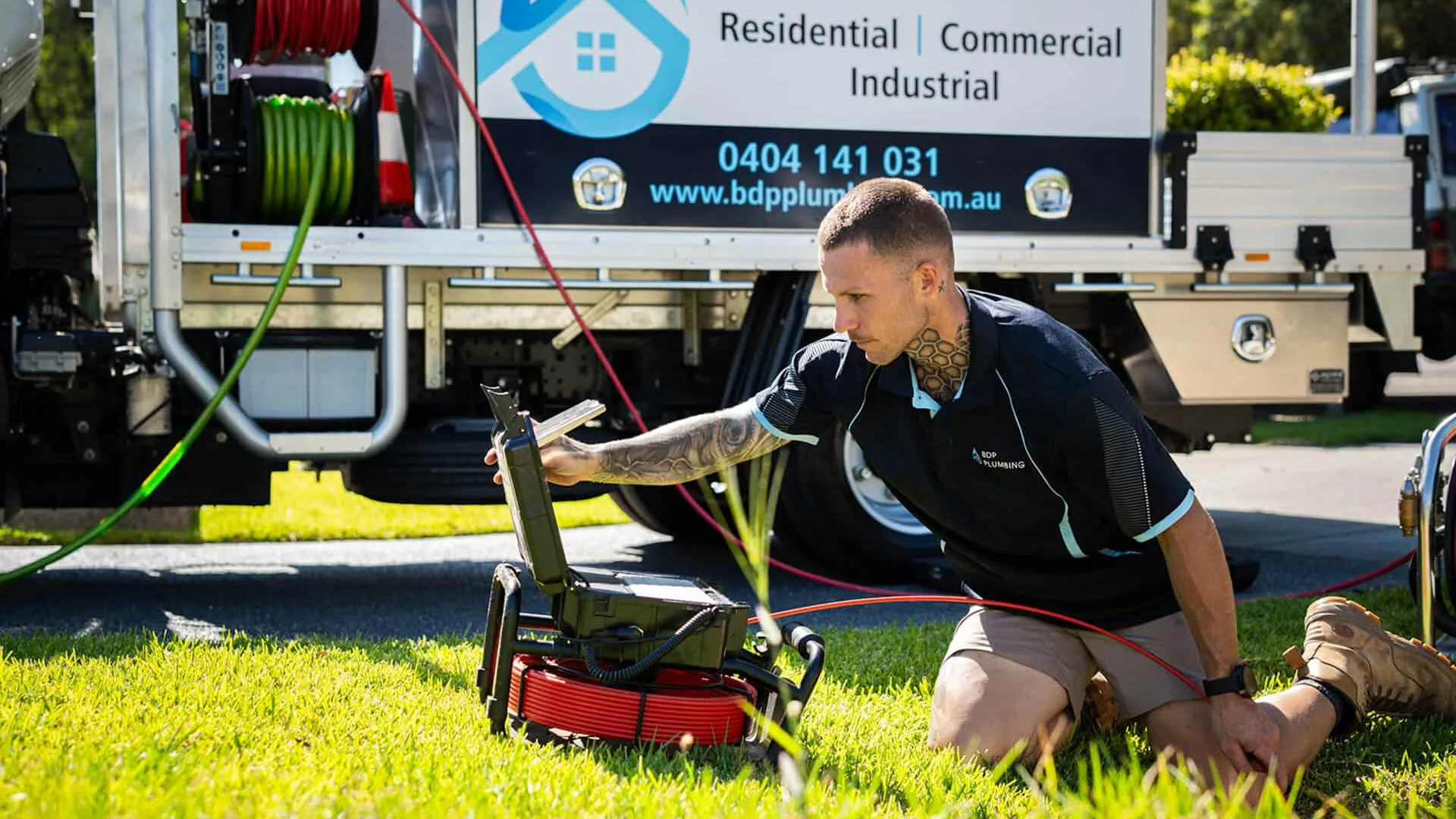
A CCTV drain inspection puts a camera inside the pipe, so the cause of a choke or a wet patch is found before a shovel touches the soil. We film drains across Birmingham Gardens and the adjoining suburbs every week, and the whole drainage range sits under the drainage hub.
Why these drains need a camera before a shovel
Most house drainage here was laid in the 1940s to 1960s as short-collar earthenware, under fibro, weatherboard and brick-veneer cottages built on reactive clay. Seventy-plus years of wet-and-dry soil movement has opened those collars up, and the joints now catch everything that flows past them.
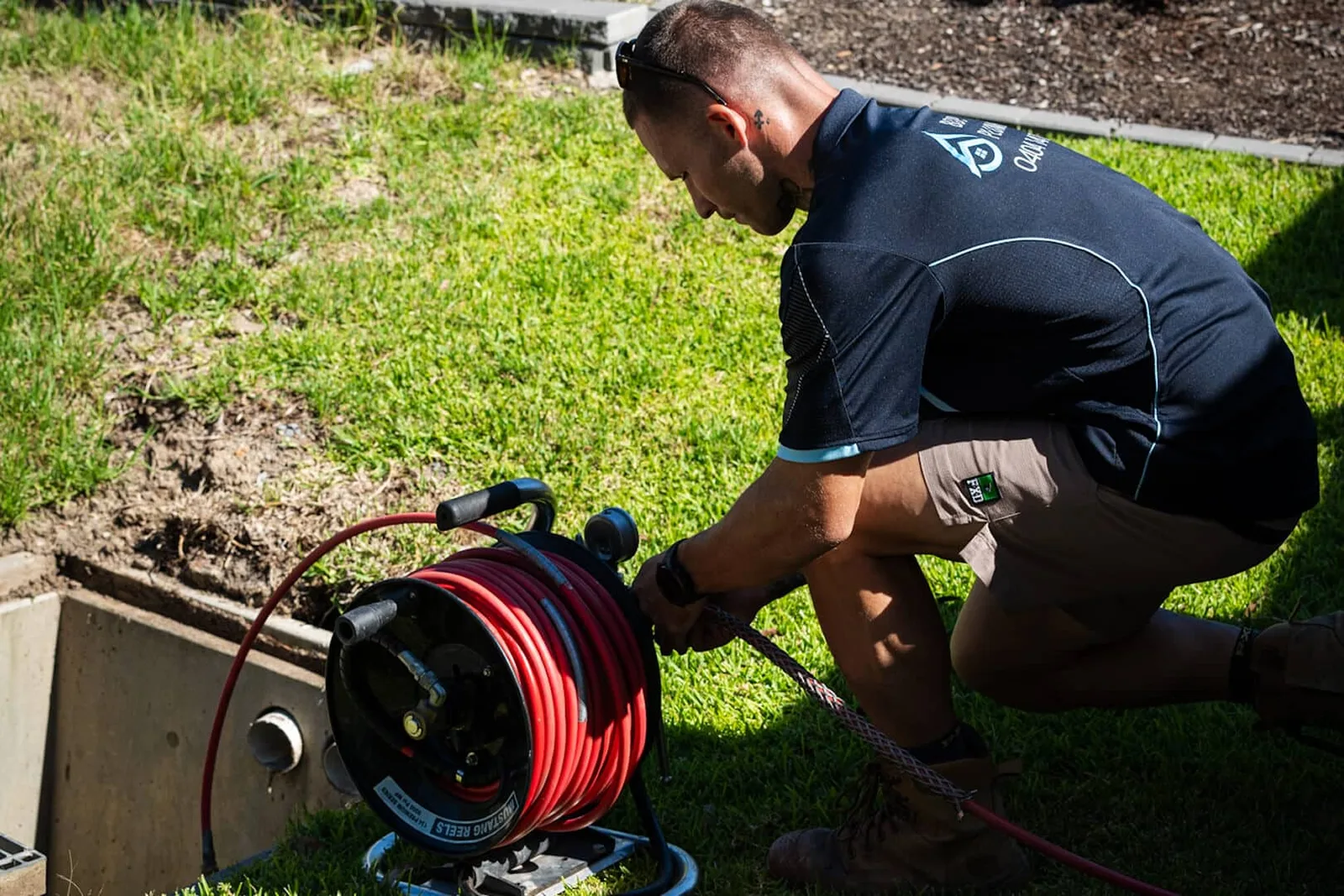
Guessing is expensive. A camera changes the conversation: instead of digging blind or clearing the same choke again and again, we see the cracked collar, the root mat or the sagged section on screen, and the quote deals with the actual fault.
- Cracked or open earthenware collars from decades of clay movement
- Tree roots threaded through any joint the campus-edge gums can reach
- Grease layers built up inside share-house kitchen lines
- Sagged or back-falling sections that choke again no matter how often they're cleared
What the camera actually does
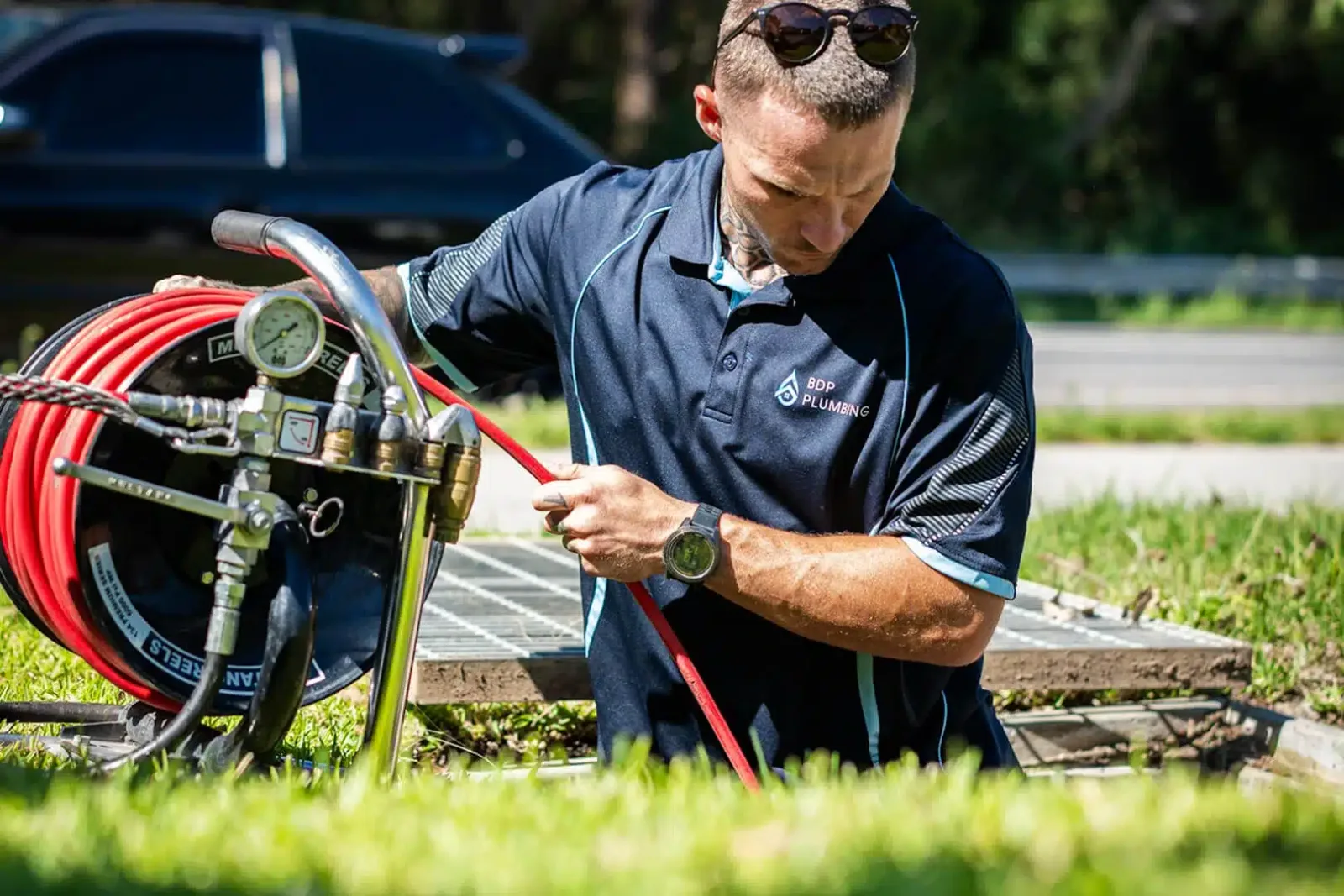
A waterproof camera head travels down the line from an inspection opening, feeding live footage back to a monitor above ground. The head self-levels, and a distance counter tracks how far along the pipe it sits.
That counter is the part that saves money. Knowing a fault sits fourteen metres from the boundary means the repair digs in one spot, not across half the yard.
Every inspection ends with a verdict, not a shrug. You see the footage, we name the fault and its location, and the repair quote lands in writing before anything starts.
The faults this suburb's camera finds most
The housing stock repeats, so the fault list repeats with it. Four findings cover most of what the lens turns up here.
Cracked collars in the earthenware
Post-war clay lines under these cottages have shifted with the reactive clay through every drought and flood since the 1950s, so repeat chokes at one address usually trace back to a single damaged joint.
Roots hunting water
The gum rows along the bushland side of the suburb send roots hunting for any crack within reach. Fine hairs find a joint first, then thicken year by year until the bore fills.
Grease in the student streets
Share houses with four or five cooks per kitchen push more fat down the sink than a family home ever will, and the footage shows the grease layer narrowing the bore.
Sags and back-falls
Some sections have settled with the ground over seventy years. A back-fall holds water and waste at the low point, so the line chokes there whatever goes down the sink.
How the inspection runs
- 1
Call and tell us
Ring (02) 4063 3422 and tell us what's going on in Birmingham Gardens. We'll ask a few quick questions so the right gear is on the truck the first time.
- 2
Quote before work
You get the price before anything starts. No call-out fee, no hourly surprises - you approve the quote or we shake hands and leave, no charge.
- 3
Camera down the line
We open the nearest inspection point, run the camera the full length of the line, and mark anything wrong. You watch the footage with us, so nothing about the fault is second-hand.
- 4
Backed, no questions asked
If something isn't up to standard afterwards, we come back and make it right, no questions asked. That's the standard every Birmingham Gardens job is held to.
When an inspection is worth booking
Some calls need a clear, not a camera. But a few situations make the inspection the smarter spend.
- A line that has choked two or more times in the same year
- A choke that cleared but left gurgling or slow drainage behind
- A purchase or pre-lease check on an older cottage, where the drain's history is unknown
- After jetting, to confirm the line is genuinely clean rather than just quieter
Landlords around the university use the last one heavily. With most of the suburb's stock tenanted, a footage file on record settles arguments about what was in the pipe and when.
If you're buying a weatherboard cottage off Englund Street or anywhere else in the pre-1970s grid, the footage tells you whether the earthenware line is sound or carrying cracked collars before the contract goes unconditional.
From footage to fix
The camera is a diagnostic, not a repair. What happens next depends on what it shows.
A clean line with light roots.
A cracked collar or sagged section.
Grease on the bore walls.
Whatever the outcome, the price comes before the work. That applies to the inspection itself and to anything we recommend after seeing the footage.
Where this fits in the drainage service
Camera work sits in the middle of the drainage range. Each neighbouring page handles a different stage of the same job.
Already know the line is choked?
Several fixtures backing up at once?
Yard or downpipe flooding after storms?
Footage shows grease or a root mass?
A wet patch on the supply side is a different problem altogether. Leak detection traces water that never passes through a drain, and the drainage hub links the whole set.
CCTV drain questions
How long does a CCTV drain inspection take?
A standard house line usually takes under an hour once the opening is found. Lines with several branches take longer, and we say so in the quote before starting.
Do you dig up the yard to inspect a drain?
No. The camera runs through the existing pipe from an inspection opening, so the yard stays intact. Digging only enters the picture if footage shows a section needing replacement.
Can a camera find tree roots in a clay drain?
Yes, and it's a common finding on the gum-lined side of the suburb. The footage shows whether roots are fine hairs at a joint or a mature plug filling the bore, which decides the recommendation.
Should I book an inspection before buying an older house?
If the house predates the 1970s, it's money well spent. You learn whether the earthenware line is sound or carrying cracked collars and root intrusion before you own the problem.
What happens if the camera finds a broken section?
We show you the footage, mark the depth and distance of the break, and quote the repair in writing. You approve the figure before any digging starts.
How often should old clay drains be inspected?
Every couple of years suits earthenware sitting in reactive clay, plus any time a line chokes twice within twelve months. Catching root intrusion early keeps the fix small.
Plumbers in Birmingham Gardens and the suburbs around it